Guangzhou
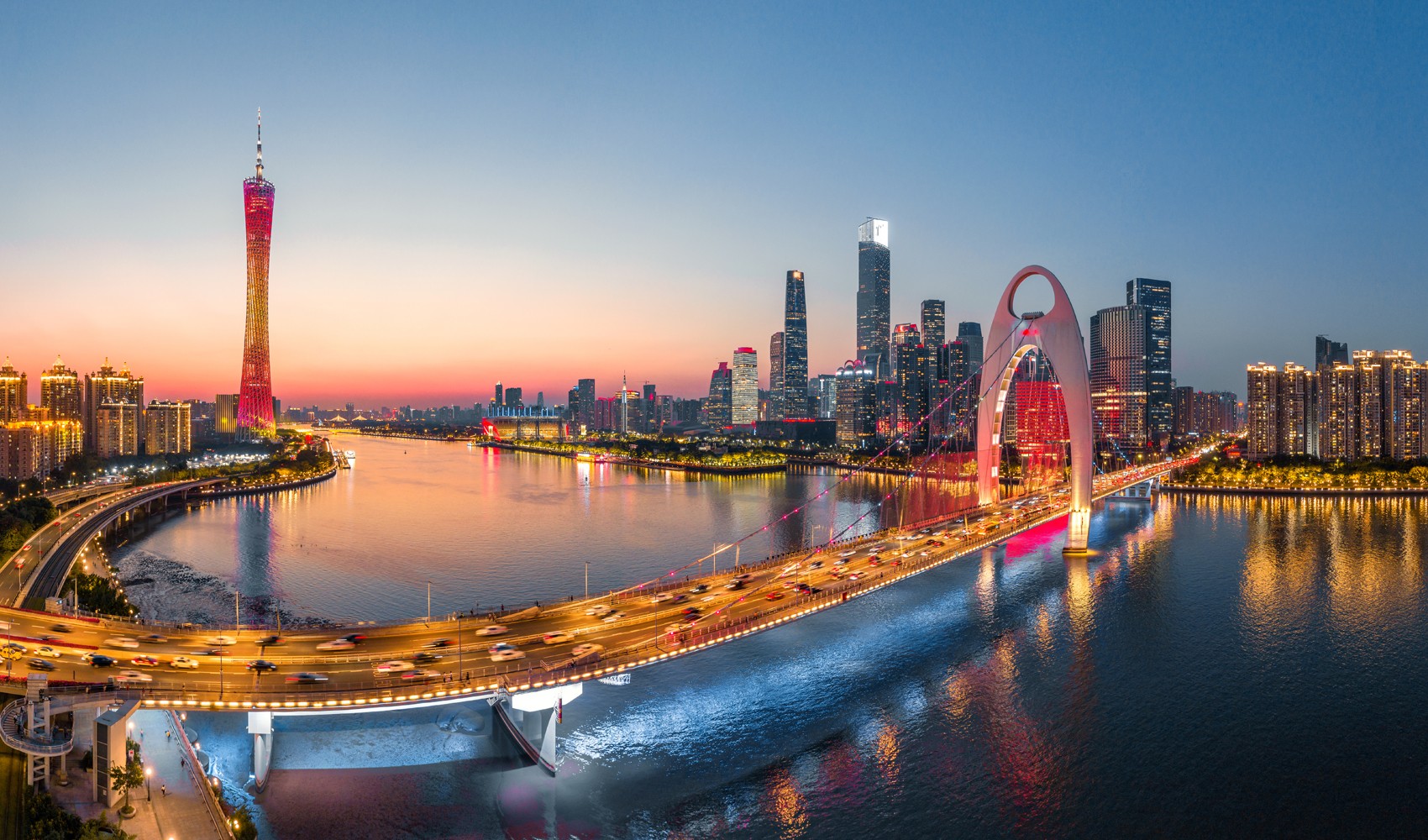
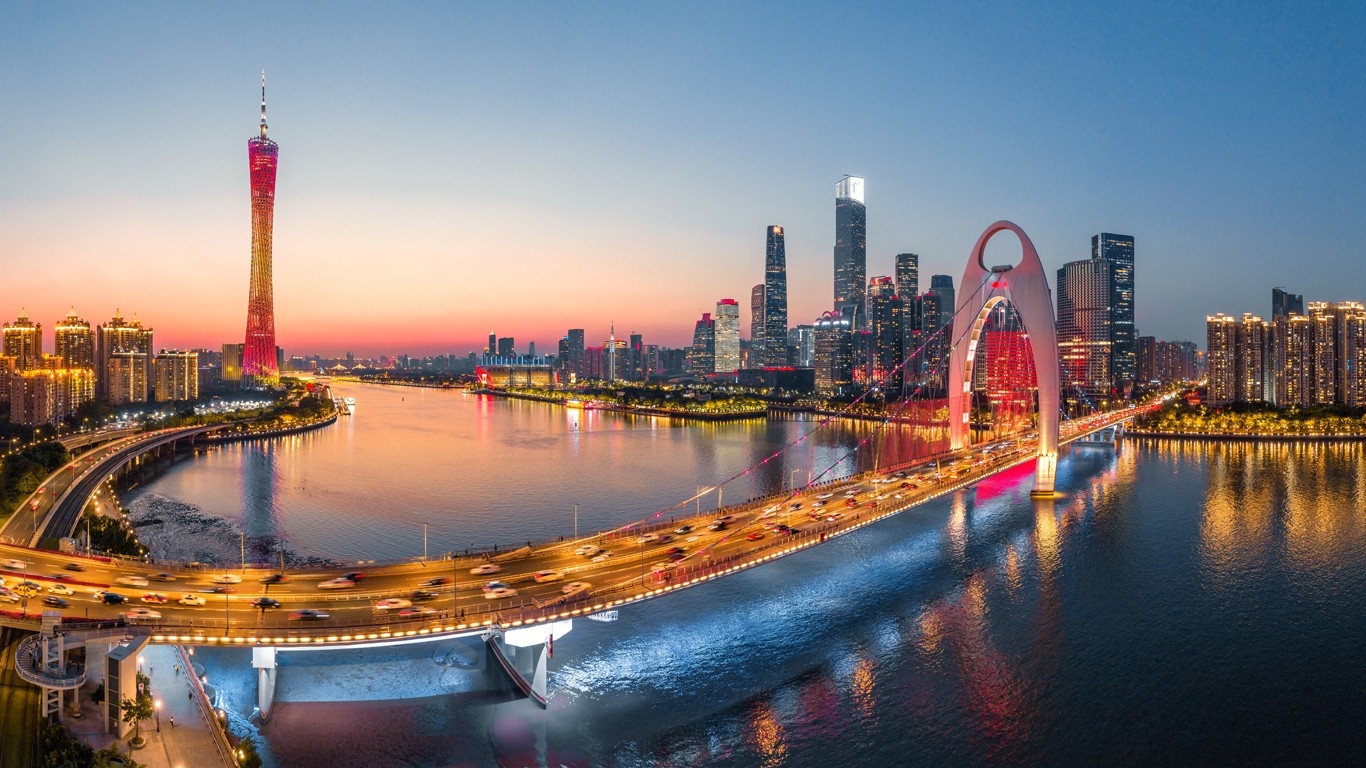
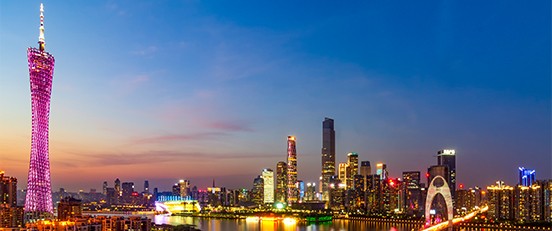
Guangzhou, known in the West as Canton, is the capital city of Guangdong. Legend says five gods riding goats brought the first grain to Guangzhou, hence its "Goat City" nickname. It's no myth, however, that Guangzhou is south China's main seaport, with rail connections to nearby Hong Kong. The city features the National Peasant Movement Institute, founded by Mao Zedong and Zhou En Lai. Historical monuments include Dr. Sun Yat-Sen Memorial Hall, commemorating the Nationalist revolutionary movement, seated here in 1913. Many of the buildings and churches on Shamian Island are well maintained and rather pretty.
Baiyun Mountain
It(Baiyun shan) makes a pleasant half day trip away from the traffic and congestion of Guangzhou . The Mountain (known locally as White Clouds Mountain ) is approximately 15 km north of the city and is part of the Kunshan Mountain range. This is a pretty spot with pagodas, monasteries and tea houses dotted about the mountain park. The mountain has some nice scenery and is refreshingly lush and green. It can get busy here, and the Chinese are particularly keen on this mountain but, it is large enough to enable you to rid yourself of the crowds. The peak, 'Star touching hill' (Moxing Ling) is a three-hour walk from the base and affords spectacular views over the surrounding countryside and city. The view at sunset is especially nice. |
![]() |
Baiyun Mountain |
Orchid Park
The Orchid Park ( Lan pu ) is a spectacular and unique sight in the summer months when there are over 100 different types of orchid on display here. In winter however, there is much less to see and it is hardly worth making the effort. This cool and quiet garden is elegantly designed with winding paths, pools, pavilions and flower beds. It is a traditional Chinese style garden and is the perfect place to escape the smoggy streets of Guangzhou . |
![]() |
Orchid Park |
The Temple of Six Banyan Trees
It(Liu rong si) is a pretty and exceptionally well maintained temple situated in the heart of Guangzhou . The Temple originally had a different name but was renamed the 'banyan tree' temple by the dissident poet Su Dongpo who visited the site in 1,100. This is a very active working temple. An interesting construction stands in the temple grounds. The Hua Ta Pagoda is an octagonal building, reaching up seventeen storeys. The sculpture in the wooden eaves and the ceiling here is exquisite and there are hundreds of small posing Buddha's peering out at visitors as they make the climb up the steep staircase. |
![]() |
The Temple of Six Banyan Trees |